

The Southwest Alberta Hackathon is hosted by Palliser Regional Schools and The Callysto Project, which teaches skills like computational thinking, …
from Google Alert – “Computational thinking” https://ift.tt/37T5yU0
via critical thinking
Author: erinconradmountainbradley hi
I am a IT teacher, who enjoys using and exploring technological tools -unconventional learning models opened up by 21st century technology. Avid reader and somewhat philosophical type (a Tektologist) in the Bogdanovian sense) out to explore the limits of where learning can go -from a comprehensive perspective.
Steyning student reaches finals of Oxford computer science challenge
The UK Bebras Computational Thinking Challenge, held at the university's department of computer science, was designed to get students excited …
from Google Alert – “Computational thinking” https://ift.tt/2uvsyuF
via critical thinking
Coding lessons for pupils in Ghent
Furthermore, lessons in programming and computational thinking should teach youngsters much more than computer skills. Rather, the classes ought …
from Google Alert – “Computational thinking” https://ift.tt/3928Gy2
via critical thinking
Roadblocks to quality education in a time of climate change
By Christina Kwauk
Executive Summary
In October 2018, the Intergovernmental Panel on Climate Change (IPCC) released a special report that spelled out a dire vision of the future for planet Earth if climate action around the world is not accelerated by 2030. Out of the commentary that emerged, few have championed the report’s acknowledgment that education, especially when informed by indigenous and local knowledge, can help to 1) accelerate the wide-scale behavioral change needed for an equitable system-wide transition to a carbon neutral economy, and 2) build competencies and knowledge to enhance innovation and the policy and technological adaptation required to limit global warming to 1.5°C.
The lack of education champions within the global climate “policyscape” is fueled in part by an overemphasis of political attention and financial resources—when attention and resources are given at all—toward efforts to reduce greenhouse gas emissions. At the same time, the global education community’s attention and resources have been fractured by many development priorities, diluting the efficacy of its power to be a gamechanger in climate action.
The urgency of the climate crisis demands not only greater coherence and coordination of education efforts, but also a deep reexamination of the education sector’s role in the perpetuation of the status quo. This applies across formal education institutions (primary, secondary, and tertiary school), nonformal programs (often delivered by nongovernmental or community-based organizations), and informal spaces (on the radio, in libraries, museums, or even grocery stores and bus stops). It also demands attention from children, youth, and adults in both high-carbon emitting and low-carbon emitting countries, as well as within and across sectors (e.g., education, energy, transportation, agriculture, and urban planning).
As a starting point for critical discussion among education and noneducation actors, this paper focuses on formal education spaces where coordinating local efforts across districts, states, and nations can have impact on a global scale. First, the paper illustrates why more attention to and investment in education as a means of reducing risk and increasing informed action to climate change is needed, lest the technofixes of today lack political will and localized solutions for sustained, collective climate change action in the future. Second, it describes the current policy landscape for education in climate action, and climate in education. Third, the paper presents five underlying challenges preventing the formal education sector from taking a more proactive role in climate action. These roadblocks can then become entry points for policy and action. Finally, the paper lays out three actions that education and climate actors can take to not only chart a roadmap for the education sector in climate action, but to generate a new set of game-changing rules.
Note: In this paper, the term “global education community” is used to loosely describe the sum of education actors globally (civil society organizations, nongovernmental organizations [NGOs], government ministries, activists and advocates, etc.). The term does not imply that this collective set of actors views themselves as a single, cohesive community. The term “education sector” is used to describe the systems of education delivery (schools, school systems, ministries of education, etc.), while “education” refers to the process of teaching and learning.
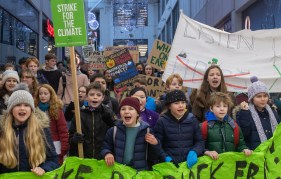


from Brookings Topics – Global Education https://ift.tt/391lrJj
via IFTTT
CS50 2019
CS50 2019 – Lecture 0 – Computational Thinking, Scratch. CS50 · 1:46:15 · CS50 2019 – Lecture 1 – C. CS50 · 1:47:21. CS50 2019 – Lecture 2 – Arrays.
from Google Alert – “Computational thinking” https://www.google.com/url?rct=j&sa=t&url=https://m.youtube.com/watch%3Fv%3DjjqgP9dpD1k%26list%3DPLhQjrBD2T381L3iZyDTxRwOBuUt6m1FnW%26index%3D2%26t%3D0s&ct=ga&cd=CAIyHDMwNjM1ZmE5ODdjODA3NzE6Y28uemE6ZW46WkE&usg=AFQjCNHTDAjURLngA9byNyClqL5cALwbEA
via critical thinking
Atal Innovation Mission contributes Immensely to promote innovation, entrepreneurship across India
… across India to foster curiosity, creativity and imagination in young minds and inculcate skills such as design mindset and computational thinking.
from Google Alert – “Computational thinking” https://ift.tt/2PeN3mo
via critical thinking
The City of Durham Awards eMerging Entrepreneurs, Inc. with Participatory Budgeting Grant to …
… with opportunities to develop the entrepreneurial and computational thinking skills to become leaders in today's digital, technology-driven economy.
from Google Alert – “Computational thinking” https://ift.tt/2T9faoa
via critical thinking
Brothers win acclaim in science competition
Robin and Kit Skailes had a memorable day in the finals of the UK Bebras Computational Thinking Challenge at the University of Oxford last week.
from Google Alert – “Computational thinking” https://ift.tt/3a5C2vV
via critical thinking
Computational Thinking & Block Programming in K-12 Education
In this self-paced, start anytime, online course you will learn to teach computational thinking and block-based programming for K-12 students.
from Google Alert – “Computational thinking” https://ift.tt/2VbwKe6
via critical thinking
Registration open for four KAMS camps led by FHSU faculty in June 2020
These students will even get to develop their computational thinking skills by programming a Raspberry Pi microcomputer. Discover nature with us in a …
from Google Alert – “Computational thinking” https://ift.tt/32du4xI
via critical thinking
 New innovative Approaches