Curriculum provides a learning pathway, but what do students see in the classroom?

By Margaret Sinclair, Esther Care

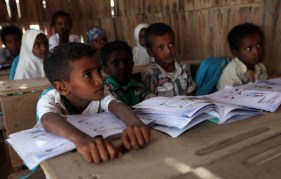
Business-as-usual schooling in many countries is not engaging the hearts and minds of most children. Textbook-focused, rote learning and a focus on exams that measure cognitive, but not behavioral or social-emotional learning mean that the education Sustainable Development Goal (SDG)—that is, all children achieving basic levels of reading and writing at the primary level—is unlikely to be met.

In response to this global education challenge, a new publication from the global nonprofit networking organization NISSEM is turning this dynamic on its head. In a series of 42 briefs from more than 60 contributors around the world, the NISSEM publication points to textbooks and other printed material in the classroom as the key to better learning and building lifelong commitment to sustainable development.

Expanding upon the literature on social and emotional learning, which is typically focused on higher income countries, most of the briefs highlight practice and research in low-, middle-, or post-conflict countries. Section 1 begins with global issues around textbooks and the following eight sections range from the design of textbooks and other education support materials to areas where ministries of education can intervene at relatively low cost—with emphasis throughout on empowering textbook writers to help imbue students with knowledge, skills, and social commitment.

The briefs all address how education in countries with modest resources and struggling education systems can improve many of the goals in SDG Target 4.7: respect for diversity, responsible citizenship, and climate change, among other 21st century challenges. All of these require not just knowledge but also positive social and emotional learning (SEL), as well as proficiency in problem solving, collaboration, and creative thinking. The NISSEM global briefs offer three key points for policymakers:

1.       Textbooks need to be aligned with the mission and vision of the SDGs, and in particular SDG Target 4.7, which calls for ensuring all learners acquire knowledge and skills needed to promote sustainable development.

2.       Textbooks in low- and middle-income countries should embed SEL-supportive pedagogy and SDG Target 4.7 content.

3.       Despite predictions of not meeting the SDGs, it is a realistic goal for donors and education ministries to create a new generation of textbooks with balanced academic, social-emotional, and behavioral dimensions as a matter of extreme urgency.

In this blog, we focus on the first key point, and future blogs will examine the other two. NISSEM puts forward a “selective strategy” of working with writers as a low-cost but high-impact option to optimize SDG4 outcomes, including SEL as an aspect of education quality. NISSEM takes the position that writers need to understand SEL and SDG Target 4.7 and to embed them in local educational materials.

Why is SEL important? First, it is foundational to the development of students’ “life skills” and to building a better society; this requires social skills, empathy, and responsible decisionmaking. Moreover, SEL development does not come at the expense of academic studies but supports them. Worldwide, currently there is increasing interest in “SEL” at the same time some of the themes advanced by the international community, such as respect for cultural diversity, gender equality, and culture of peace and human rights, may not be universally accepted. Each country needs to identify topics that relate to SDG 4.7 and their own key national priorities and, as several briefs highlight, even SEL needs to be defined within each cultural context. Moreover, textbook writers must be fully oriented on these topics and integrate them and their related pedagogies into textbooks, not to mention associated assessments and teacher professional development.

Ideally, textbooks can become tools for teaching and learning that consider not only individual cognitive and social competencies, but also understanding of societies, their conflicts, their transitions, and their cultures. Among all educational materials, textbooks stand out because they:

·         embody the national curriculum and represent government policy

·         frame teaching and learning in the classroom

·         influence teachers who have less training but are tasked with covering curriculum and textbook content.

At the same time, funders need to resist the temptation to overload textbooks with too many topics/objectives because experience shows that in low- resource and conflict settings, if textbooks are not low cost, they will not be widely used.

Textbook writers need to be aware of issues and teaching approaches that motivate different age groups and are prioritized by and acceptable to stakeholders in each context. Local surveys may need to be conducted on what is locally acceptable before writers can begin work. For example, parents in Malawi, Uganda, and Ghana (Matthew Jukes in brief 7, and Jisun Jeong in brief 9) value behavior that differs widely from the SEL frameworks developed in the U.S. In addition, different stakeholders within a country or community differ in what they value. For example, rural families in Ghana particularly value children’s obedience and respectful and cooperative behavior, while teachers in those same communities placed a higher value on curiosity. 

Moreover, in countries with multiple ethnicities, religious groups, and geographies, contextualizing curriculum can be extremely complex. For example, Bethany Mulimbi (brief 19) argues that in Botswana education contributes to national unity by focusing on majority culture—but minority groups still need greater recognition. Elsewhere, problems associated with identity may present dramatic problems, as in Somaliland where teachers have been known to remove pages from textbooks if their identity group was not represented as reported by Alexandra Lewis in brief 20. Seungah Lee and Patricia Bromley (brief 3) argue that coverage of citizenship and environmental topics is increasing in national textbooks and curriculum policies, but there is still a long way to go. Katherine Blanchard and co-authors (brief 17) emphasize that textbooks must support an additive and inclusive identity based on SEL to support goals of social cohesion, global citizenship, and sustainable development.

SEL, SDG 4.7, and identity are closely related, but the concepts are complex and take different shapes in different settings. Poonam Batra (brief 22) explains that textbook writers need time and space to generate new and motivational content, and to support a lively pedagogy embedded within the books themselves. Collectively, the NISSEM briefs argue that a change of mindset is needed at the global and national levels, but that this is doable and that textbooks are a great lever for changing business as usual.


from Brookings Topics – Global Education https://ift.tt/2ogoRWI
via IFTTT
Closing the opportunity gap in the Sahel

By Hafez Ghanem, Annette Dixon

Inundated by bleak headlines and even bleaker forecasts, it is easy to forget that, in many ways, the world is better than it has ever been. Since 1990, nearly 1.1 billion people have lifted themselves out of extreme poverty. The poverty rate today is below 10 percent – the lowest level in human history. In nearly every country, people are healthier and better educated than ever before. Yet, as a just-released Goalkeepers report underscores, hardship remains the norm for many people worldwide, who continue to face high barriers to building a healthy, productive life.

America’s Democrats have made a serious mistake by launching impeachment proceedings against President Donald Trump. They are replaying the Republican impeachment of Bill Clinton in 1998, a futile exercise that damaged Republicans, enhanced Clinton’s power, and caused institutional damage as well.

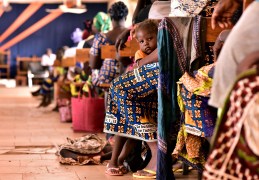
Nowhere is this truer than among the poorest residents of the Sahel region of sub-Saharan Africa. The countries of the Sahel rank among the world’s lowest on the Human Capital Index, which quantifies the contribution of health and education to the productivity of the next generation of workers. According to the Goalkeepers report, a child in Chad is 55 times more likely to die in the first five years of life than a child in Finland. Nearly half the people living in Chad live below the poverty line, only 50 percent of children attend school, and just 15 percent of sixth-graders are able to read a simple story. Poverty is exacerbated by climate change, conflict, and displacement, making it even more difficult for families to invest in their human capital.

To ensure that all people—not just those lucky enough to be born into relative geographic, gender, or socioeconomic privilege—can fulfill their potential, governments must invest more in human-capital formation. This means strengthening education systems, so that residents can acquire the skills they need to thrive economically. And it means ensuring access to quality health and nutrition services.

Just as malnourished or otherwise unhealthy adults are less productive, malnourished or otherwise unhealthy children cannot learn as effectively, let alone grow into healthy, productive adults. But making the most of such investments demands not only generalized efforts, but also delivery of services tailored for girls and women, from family planning through childhood and adulthood.

Such services can enable girls to stay in school longer, gaining the knowledge and skills they need to participate effectively in the labor force. By allowing girls and women to choose to delay pregnancy and child-rearing until they are ready, such services not only support women’s empowerment; they also advance economic progress.

Healthier, better-educated mothers have healthier, better-educated families, not least because women tend to invest more of their incomes in their children. Through this channel, woman-focused health services ultimately help to raise living standards and break the cycle of poverty, while spurring broader economic development.

To help countries to reap these benefits, in 2017 the World Bank created the Human Capital Project, which works to catalyze investments in health and education, and to guide them in ways that provide all people with equal opportunities to thrive. The Bank is also cooperating with partners to achieve a 50 percent increase in overall resources for human capital in Africa by 2023, with a focus on fragile and conflict affected countries.

Our experience working in challenging contexts has shown that, to make the most of these investments, countries must pursue an integrated multisector approach, tailor interventions to each community’s needs, and engage all stakeholders, from religious leaders and health workers to mothers and husbands. The Sahel Women’s Empowerment and Demographic Dividend Project (SWEDD)—supported by the United Nations Population Fund, the Bill & Melinda Gates Foundation, and other development partners—is a case in point.

SWEDD is working closely with governments in the Sahel to equip them to provide health and nutrition support, advance gender equality, improve school quality, and introduce social safety nets. To support this process, SWEDD is pursuing innovative initiatives in a broad range of countries, from Benin to Côte d’Ivoire.

In Burkina Faso, current and future husbands are learning about the importance of family planning and of distributing household chores more equally at one of more than 1,600 “husband clubs.” In Mauritania, SWEDD is working with community and religious leaders to help reduce gender discrimination, violence against women, and child marriages.

In Chad, SWEDD-backed vocational training programs are equipping women with marketable skills, such as driving tractors and installing solar electrical systems. And in Mali, SWEDD is distributing bicycles to help girls get to school and providing support to midwives, so that they can provide critical prenatal, delivery, and postnatal health services in poor areas, thereby reducing maternal and infant mortality.

If the world is to continue to improve, let alone achieve the U.N. Sustainable Development Goals, poor countries like those in the Sahel must strengthen their human-capital foundation. It will not be easy, but experience shows that with sustained investment, close coordination, and an inclusive approach, it is possible.


from Brookings Topics – Global Education https://ift.tt/2oW6oOT
via IFTTT

Closing the opportunity gap in the Sahel

By Hafez Ghanem, Annette Dixon

Inundated by bleak headlines and even bleaker forecasts, it is easy to forget that, in many ways, the world is better than it has ever been. Since 1990, nearly 1.1 billion people have lifted themselves out of extreme poverty. The poverty rate today is below 10 percent – the lowest level in human history. In nearly every country, people are healthier and better educated than ever before. Yet, as a just-released Goalkeepers report underscores, hardship remains the norm for many people worldwide, who continue to face high barriers to building a healthy, productive life.

America’s Democrats have made a serious mistake by launching impeachment proceedings against President Donald Trump. They are replaying the Republican impeachment of Bill Clinton in 1998, a futile exercise that damaged Republicans, enhanced Clinton’s power, and caused institutional damage as well.

Nowhere is this truer than among the poorest residents of the Sahel region of sub-Saharan Africa. The countries of the Sahel rank among the world’s lowest on the Human Capital Index, which quantifies the contribution of health and education to the productivity of the next generation of workers. According to the Goalkeepers report, a child in Chad is 55 times more likely to die in the first five years of life than a child in Finland. Nearly half the people living in Chad live below the poverty line, only 50 percent of children attend school, and just 15 percent of sixth-graders are able to read a simple story. Poverty is exacerbated by climate change, conflict, and displacement, making it even more difficult for families to invest in their human capital.

To ensure that all people—not just those lucky enough to be born into relative geographic, gender, or socioeconomic privilege—can fulfill their potential, governments must invest more in human-capital formation. This means strengthening education systems, so that residents can acquire the skills they need to thrive economically. And it means ensuring access to quality health and nutrition services.

Just as malnourished or otherwise unhealthy adults are less productive, malnourished or otherwise unhealthy children cannot learn as effectively, let alone grow into healthy, productive adults. But making the most of such investments demands not only generalized efforts, but also delivery of services tailored for girls and women, from family planning through childhood and adulthood.

Such services can enable girls to stay in school longer, gaining the knowledge and skills they need to participate effectively in the labor force. By allowing girls and women to choose to delay pregnancy and child-rearing until they are ready, such services not only support women’s empowerment; they also advance economic progress.

Healthier, better-educated mothers have healthier, better-educated families, not least because women tend to invest more of their incomes in their children. Through this channel, woman-focused health services ultimately help to raise living standards and break the cycle of poverty, while spurring broader economic development.

To help countries to reap these benefits, in 2017 the World Bank created the Human Capital Project, which works to catalyze investments in health and education, and to guide them in ways that provide all people with equal opportunities to thrive. The Bank is also cooperating with partners to achieve a 50 percent increase in overall resources for human capital in Africa by 2023, with a focus on fragile and conflict affected countries.

Our experience working in challenging contexts has shown that, to make the most of these investments, countries must pursue an integrated multisector approach, tailor interventions to each community’s needs, and engage all stakeholders, from religious leaders and health workers to mothers and husbands. The Sahel Women’s Empowerment and Demographic Dividend Project (SWEDD)—supported by the United Nations Population Fund, the Bill & Melinda Gates Foundation, and other development partners—is a case in point.

SWEDD is working closely with governments in the Sahel to equip them to provide health and nutrition support, advance gender equality, improve school quality, and introduce social safety nets. To support this process, SWEDD is pursuing innovative initiatives in a broad range of countries, from Benin to Côte d’Ivoire.

In Burkina Faso, current and future husbands are learning about the importance of family planning and of distributing household chores more equally at one of more than 1,600 “husband clubs.” In Mauritania, SWEDD is working with community and religious leaders to help reduce gender discrimination, violence against women, and child marriages.

In Chad, SWEDD-backed vocational training programs are equipping women with marketable skills, such as driving tractors and installing solar electrical systems. And in Mali, SWEDD is distributing bicycles to help girls get to school and providing support to midwives, so that they can provide critical prenatal, delivery, and postnatal health services in poor areas, thereby reducing maternal and infant mortality.

If the world is to continue to improve, let alone achieve the U.N. Sustainable Development Goals, poor countries like those in the Sahel must strengthen their human-capital foundation. It will not be easy, but experience shows that with sustained investment, close coordination, and an inclusive approach, it is possible.


from Brookings Topics – Global Education https://ift.tt/2nvLZ2L
via IFTTT