Youtube Video Postings
Title:Bryneven Primary Lesson: On Off Switches in Purple Mash with Grade 3
DESCRIPTION:
LINK TO VIDEO:
https://youtu.be/DTGbP_Lbpao


An exploration into technological innovation and its impact on creativity.
Title:Bryneven Primary Lesson: On Off Switches in Purple Mash with Grade 3
DESCRIPTION:
LINK TO VIDEO:
https://youtu.be/DTGbP_Lbpao
SCCOE provided a two-day teacher training on computer science and computational thinking and established a Computer Science Community of …
from Google Alert – “Computational thinking” https://ift.tt/2O8MyJo
via critical thinking
Computational Thinking with Algorithms. Status. Uploaded to Banner. Start Term. 2017. NFQ Level. 08. ECTS Credits. 05. Module Code. COMP08033.
from Google Alert – “Computational thinking” https://ift.tt/2rCKxxf
via critical thinking
Ju-Ho Lee
By Camille May
Professor Ju-Ho Lee served at the Minister of Education, Science, and Technology of Republic of South Korea from 2010 to 2013. Before joining the ministry as a Vice Minister in 2009, he was Senior Secretary to the President for Education, Science, and Culture. He has been recognized for his education reform endeavors and active lawmaking as a member of the National Assembly (2004-2008). His policy entrepreneurship began when he worked as a research fellow in Korea Development Institute (KDI) and as a professor of KDI Public Policy and Management. He has written many articles and books including Human Capital and Development: Lessons and Insights from Korea’s Transformation (2018) and Positive Changes: The Education, Science & Technology Policies of Korea (2012). He is actively working for the international community as a Commissioner of the International Commission on Financing the Global Educational Opportunities, a Commissioner of 3ie and a Chair of the Education Workforce Initiative.
from Education Technology https://ift.tt/2QqQ6tl
via IFTTT
By Helyn Kim, Vishal Talreja, Sreehari Ravindranath
“Take a deep breath. Release. Take a deep breath. Release. Concentrate on the noises coming from the environment. What do you hear? Slowly, focus on your own breathing.” A grade 7 teacher at Rajkiya Pratibha Vikas Vidyalaya in Delhi, walks her students through a breathing exercise. After three minutes, she says, “When you are ready, starts moving your toes; start moving your fingers; now, slowly, open your eyes.” This is a typical morning in happiness class.
Education systems around the world are facing challenges in preparing students to deal with the demands of unpredictable environments. Specific to India, children growing up in adverse circumstances and come into the school system as first-generation learners don’t have the foundational capacities to learn and engage in the classroom. Moreover, depression is a serious issue among youth, with increasing number of suicides each year. In addition, the World Happiness Report, 2019 ranked India 140 out of 156 countries. In response, the Delhi Government launched the happiness curriculum in all 1,030 government schools from kindergarten through grade 8 in July 2018. In line with the vision for India’s education system as well as the Sustainable Development Goals (SDG-4), the implementation of the curriculum is a landmark first step in expanding a formal, public education system to focus on the holistic development of all learners, invest in their well-being, and improve the overall quality of education.
The development of the curriculum began with one question: What makes a good life? Traditionally, education has been oriented toward making a living, but it does not teach students how to make a good life and contribute to society. The Delhi government set out to solve this problem, and approximately 40 total teachers, in partnership with four NGOs, were chosen to write a curriculum that would develop “emotionally sound students.” Before writing the curriculum, the 4016 teachers were trained in what is known as “Madhyasth Darshan” or “coexistential thought,” which is based on understanding all aspects of life, including spiritual, intellectual, behavioral, and material. According to this philosophy, life satisfaction and happiness can be achieved by being aware of the self, body, family, society, nature, and universe in order to live in harmony. However, while the Madhyasth Darshan program is designed for adults, the nonprofit Dream a Dream trained the mentor teachers to work with children using a contextualized empathy-based pedagogies and life skills approach for children. This philosophy permeates the happiness curriculum to address the learners’ emotional and mental needs by creating a stimulating environment through mindfulness, critical thinking, storytelling and experiential, play-based activities. In the happiness classes, it is not about being right or wrong; it is about allowing students to express themselves, without judgement. Teachers are not required to finish the syllabus, but rather, to ensure that all children internalize and understand the concepts taught and have the opportunity to participate.
Sound too good to be true? Are the students happier because of the happiness curriculum? That’s the question that is on the minds of the Delhi government, curriculum developers, happiness coordinators, teachers, and parents.
Over a nine-month period, the Brookings Institution is partnering with Dream a Dream, to develop measures that can assess the happiness curriculum by looking at whether there are changes in teacher and student behaviors attributable to the curriculum—a first step to evaluating its effectiveness.
The goals of the project are:
1. to understand and identify the factors that contribute to happiness;
2. to develop measures that capture teacher and student behaviors associated with the factors that contribute to happiness; and
3. to analyze the curriculum to identify the expected standards regarding teacher and student behaviors.
Recently, the Brookings and Dream a Dream teams were in Delhi to get a more complete picture of the curriculum. They spent five days visiting schools, observing happiness classes, talking with developers of the curriculum, and meeting with the Minister of Education, as well as engaging in focus group discussions with mentor and classroom teachers, happiness coordinators, and students.
So far, teachers and students are noticing changes, not only in happiness classes, but also in other classes. According to one teacher, he feels that “students are becoming more inquisitive and are asking questions…the happiness class removes the hesitation of the students. The happiness class has improved the student-teacher relationship, so when it comes to other subjects, students are more comfortable opening up in class.” Students are also recognizing a change, especially when it comes to mindfulness activities, similar to the one described above—“it makes me feel different…my mind gets refreshed, and it helps me concentrate on the particular subject even if I am not interested.”
Despite the positive anecdotes, the happiness curriculum raises many more questions than answers for the government: “What kind of questions should we be asking? What can we expect to achieve with the curriculum, and can the approach achieve it? How effectively is the curriculum being followed? Are there differences between students who learn this curriculum and who don’t? Are there changes happening in the happiness classes compared to the other classes? Is that behavior transferring to other aspects of students’ lives?” Although we may not learn the answers to all of these questions, everyone involved views it is a long-term approach that will take much longer than a year or two to see changes. This project is an opportunity to learn about what works well and what does not, so that improvements can be made along the way.
Note: Vishal Talreja is co-founder and Sreehari Ravindranath is associate director – research and impact of Dream A Dream Foundation, which provides financial support for Brookings.
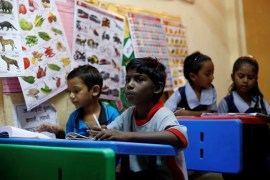


from Brookings Topics – Global Education https://ift.tt/2qR47p4
via IFTTT
6. computational modelling. "… the most learning from the least teaching.” ― seymour papert. TALK MATH TO YOUR COMPUTER. How is that …
from Google Alert – “Computational thinking” https://ift.tt/33KGxZX
via critical thinking


Formation
Having begun as a software house in 2006, Derventio entered the education sector with a visionary desire to improve schools, colleges and training organisations in such a vibrant and rewarding industry. Managing Director, Stuart Reece had previously successfully designed and written education languages software that were used in a range of organisations. A conversation with Sir Mark Grundy (now CEO of Shireland Collegiate Academy Trust) identified the need for software to support schools in their efforts to achieve improvement and maintain high standards. Mark commented that edtech should not to be used for the sake of it, but instead, should be a key tool to efficiently improve standards in education and have clear measurable outcomes. This is at the heart of the software being offered by Derventio Education to schools, colleges and training organisations.
Developing Edtech
Initially, Derventio developed electronic self-evaluation forms that were developed to support schools with their inspection preparations and ongoing school improvement. This allowed multiple senior leaders to collaborate on live working documents. The functionality, based on customer requirements, was later expanded to include staff appraisals, improvement planning, lesson observations/monitoring and managing continual professional development. The integration of these key processes has enabled a strategic approach to improvement which has seen hundreds of schools choose SchooliP.
With improvement planning applicable to all phases of education and the private sector, product offerings were expanded. CollegeiP was developed to support further education colleges and for universities, there is UniversityiP. A particular highlight is the recent development of Alto supporting the Ministry of Defence with Alto, a solution that facilitates the management of training portfolios and education provision. Working with a diverse range of institutions has led to a comprehensive customer base that has furthered a detailed understanding of education. Derventio appreciate that the world of education is constantly evolving and; therefore, enhances its software based on customer needs.

Sustained Success
Success of Derventio Education is attributed to listening. As development experts, bespoke solutions are created to meet customer requirements and deliver satisfaction. Customer account meetings, with account managers with an education background, ensures regular conversations with senior leaders to determine development road maps. As a result, there is a heightened awareness of the demands of the sector and Derventio are able to stay ahead of trends in an ever-changing environment.
Despite appraisal being sometimes perceived as a mundane process, having an electronic portfolio of evidence is invaluable. Teachers and support staff are easily able to demonstrate their strengths and identify key areas for development. Ensuring teachers have the opportunity to develop their skills is paramount to advancing teaching and learning. Therefore; products have evolved focused on improving the quality of teaching and organisation improvement.
The Future
Education is moving towards a more collaborative approach with the creation of multi-academy trusts, groups and federations. As these organisations become larger, so does the need to align and create efficient systems. They allow increased purchasing power to make informed decisions. In recognition of this, Derventio’s solutions are evolving to cater to the needs of education and for greater collaboration.
The advancement of technology represents an exciting time. Having already embraced web-based tech and mobile development, the challenge is to create products to make organisations more efficient and avoid the repetition of processes in multiple systems. With the increased usage of mobile/tablet devices by educators, plans are afoot to increase the functionality of mobile applications. Increased functionality and links with a commitment to reduce teacher workloads and allow teachers more time to do their role of teaching rather than administrative tasks. Derventio is proud to be at the forefront of education and actively assist academic institutions to maintain their integrity and ensure the wellbeing of their staff.
For more information about SchooliP’s impact in UK schools, visit: https://edtechimpact.com/products/schoolip.
http://www.innovatemyschool.com/ideas/the-story-of-derventio http://www.innovatemyschool.com/ideas/the-story-of-derventio
"We are teaching concepts like computational thinking, coding, robotics, and other skills that will really help you and other students in the 21st century," …
from Google Alert – “Computational thinking” https://ift.tt/2KjQCW6
via critical thinking
“Providing opportunities to be involved in science activities and computational thinking in their formative years will nurture and develop student's …
from Google Alert – “Computational thinking” https://ift.tt/2OdcDqO
via critical thinking
In his forthcoming book How to Speak Machine: Computational Thinking for the Rest of Us, Maeda argues that tech now dictates that the definition of …
from Google Alert – “Computational thinking” https://ift.tt/2NIXChc
via critical thinking
 New innovative Approaches