

Girls Who Game teaches female students about coding and computational thinking using Minecraft: Education Edition. The pilot program is aiming to …
from Google Alert – “Computational thinking” https://ift.tt/2BdDPQ0
via critical thinking
Tag: IFTTT
Atal Tinkering Lab inaugurated at Jamshedpur’s Kasidih High School
The lab is designed to inculcate skills such as design mind set, computational thinking, adaptive learning etc., to be in synch with the global scenario.
from Google Alert – “Computational thinking” https://ift.tt/31e2fDt
via critical thinking
To ensure a gender-transformative approach in the early years, India must engage parents and teachers
By Samyukta Subramanian
Now is a pivotal moment for early childhood education (ECE) in India. India’s draft National Education Policy (NEP), made public in June 2019, dedicates its first chapter to the importance of early childhood care and education and the need to extend the right to education to children ages three to six. The policy does not, however, address equity and inclusiveness in the early years with respect to gender. Currently, the policy takes a gender-blind approach and overlooks the need for gender-sensitive pedagogies or to challenge gender stereotypes in class or at home. This lack of attention to gender in the early years risks missing a critical opportunity to address harmful gender stereotypes that fuel gender-based violence and discrimination plaguing the country today.
There is scant research in India that systematically documents the early childhood learning environment in homes and schools regarding prevalent gender inequalities and norms. To address this gender gap in ECE, my forthcoming research as a 2019 Echidna Global Scholar explores gendered realities in the child’s early years and outlines concrete steps to promote gender transformation in early childhood.
Preschoolers spend most of their time at home with mothers, siblings, grandparents, and other family members, as well as in class with teachers and children of the same age. Notions of gender inequality are carved out in the interactions that take place in the interconnected spaces of home and school. Through interviews with mothers and teachers of preschool children in under-resourced communities, as well as observations of government-supported preschool centers, my research highlights the gendered narrative of the Indian preschool child’s educational ecosystem.
My research
During the semi-structured interviews with mothers—to my delight—I found evidence of a positive shift in the mindset of mothers of preschool children in Delhi, India. Almost all mothers considered girls and boys “equal.” They wanted their children to attend school, and regardless of gender, to get a job after school and choose a professional career as an adult. The mothers’ ability to articulate gender equality is an encouraging first step toward achieving it. However, when asked where their young preschool girls played, most mothers reported that their girls tended to play inside the home, while boys played outside, not realizing the irony of the statement when it comes to perpetuating gender stereotypes. One mother stated: “The games for boys and girls are different. Boys play cricket and like running, while girls play hide-and-seek. Girls understand household work, while boys must work outside and need more physical strength.” The same mother, however, stated that girls and boys should be treated as equals, again clearly demonstrating the gap between mothers’ articulation of gender equality between boys and girls and gender stereotypical practices.
Teachers, too, showed gendered expectations of children in class and at home. Preschool teachers stated that boys are generally naughtier than girls in the classroom; though they could not say why, they insisted this held true for all children they taught. When children parroted the gender stereotypical roles they witnessed at home in class, teachers accepted it without question. Teachers did not recognize how play, stories, songs, and other preschool activities shape stereotypes that can influence educational, occupational, and social outcomes. This underscores the need to raise awareness about gender stereotypes with preschool teachers while also equipping them with the tools to address assumptions around traditionally held gender norms in class.
Lessons learned
Two clear lessons emerged from my research: First, we must take an ecosystems approach to ECE, working with children but most importantly adults. Both parents and teachers must be sensitized for young children to develop gender equitable attitudes and behavior.
Second, changing parents’ views on traditional gender roles will require clear channels of communication and constant dialogue, which can occur through leveraging preschool teachers and digital platforms that parents can access. Teachers need to move away from the traditional “chalk and talk” role to instead nurture in the classroom and become the bridge between the child and his/her parents. They can question gender stereotypical assumptions with children and gendered expectations with parents. On the digital platform front, my research found that even in under-resourced communities, there were smart phones and television sets in every home. Using these platforms to communicate with parents could provide exposure to diverse role models and challenge traditionally held gendered notions to change behavioral practices at home.
A gender-transformative approach tackles the root causes of gender inequality and reshapes unequal power relations by working at individual, familial, and institutional levels. If we do not take a gender-transformative approach to early childhood in India by engaging girls, boys, teachers, and parents now, we won’t cut the roots of gender-based violence and discrimination before the next generation comes of age.
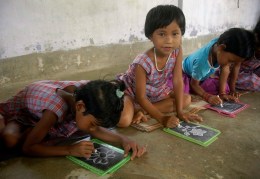


from Brookings Topics – Global Education https://ift.tt/2MJzYQ9
via IFTTT
The skills you need to get ahead in the future
Computational thinking: This enables business to use digital systems to solve complex problems, create new systems and analyse large amounts of …
from Google Alert – “Computational thinking” https://ift.tt/2OMyPtI
via critical thinking
NC State hosts second STEM Education Research Summit
“It [computational thinking] is trying to take inspiration from the work that computer scientists do; not necessarily learning specific programming …
from Google Alert – “Computational thinking” https://ift.tt/2MH212z
via critical thinking
SOU professor helps women in STEM fields advance
The first was a two-year $299,000 grant to develop the computational thinking skills of kindergarten through fifth-grade students, led by Eva …
from Google Alert – “Computational thinking” https://ift.tt/2MxK1rk
via critical thinking
How Kids in Tech Teaches Lowell-Area Children About Computer Engineering
“The goal is to ensure the kids have a strong background in computer science, computer literacy and computational thinking skills for kids ages 8 to 14 …
from Google Alert – “Computational thinking” https://ift.tt/2B1ji13
via critical thinking
Beyond labs and numbers: STEM’s role in girls’ skills development in Bangladesh
By Nasrin Siddiqa
Over the last decades, Bangladesh has seen annual GDP growth rates rise due to the arrival of the garment industry. Girls and women from all over the country flooded Dhaka in search of work, and in turn, revolutionized women’s roles as economic players. Years later, the industry is threatened by automation and globalization. While around 80-85 percent of the garment industry is comprised of women, it is the men who have leadership role in factories across the country. The girls and women of Bangladesh can offer much more, and STEM education can help lead the way.
Bangladesh has committed to reaching middle-income country status by 2021 and high-income country status by 2041, but the pathways to achieving this are unclear. Cities have a mass of educated job seekers, but it’s very difficult for rural, underprivileged girls to compete in the labor market. These girls lack basic digital skills and—perhaps more importantly—transferable skills that would equip them to thrive in a changing age of work.
As an NGO leader, science teacher, and school administrator in the last 20 years of my career, I have seen firsthand the talent of adolescent rural girls in communities across the country. The science, technology, engineering, and mathematics fields will be key if girls are to learn important skills like collaboration, problem solving, and critical thinking. Girls have both the talent and ambition to lead in STEM fields, yet they lag behind. I wanted to find out why.
My research
In my research, I interviewed and surveyed over 700 stakeholders—500 girls, 30 administrators, 75 teachers, and 100 parents. I sought to understand why STEM is dominated by men and how that starts in communities and classrooms. A common social belief is that girls are not interested in STEM or that boys are inherently capable of critical problem solving and math. Through my soon to be published research as an Echidna Global Scholar, I have disproved these harmful assumptions.
My research found that the problem lies with our infrastructural, institutional, societal barriers—some of which are visible, others which remain hard to detect. Norms, systems, and attitudes reflect a deeply patriarchal society that not only keeps girls from participating in the subject matter but limits their access to key learning opportunities. My research confirmed what I saw from many years of experience working toward girls’ quality education: Girls showed keen interest and enthusiasm to participate in Bangladesh’s economic development through careers in STEM.
Developing every day, transferrable skills
Broadening thinking around STEM is crucial. As a field, we must consider STEM as a vast category, not limited to scientific equipment and subjects, but something required for everyday life. Unlike in many language and humanities subjects, teachers use project-based learning techniques and group work to encourage innovative thinking in STEM subjects. For instance, through the physical sciences there are clear pedagogical pathways to foster collaborative team work, or through mathematical word problems to foster critical thinking, problem solving, and creativity. These are in fact the skills necessary for future success, regardless of the field of work. To ensure that girls participate fully in a 21st century economy, STEM activities must be leveraged to develop transferable skills.
Bangladesh must work to make our future generation skilled to keep up in a changing, competitive world. If stakeholders work across sectors at macro, middle, and micro levels in government, NGOs, civil society, teacher organizations, and other national and international networks, then we can make a difference. If all youth, particularly rural girls, are not prepared to rise to the challenge, Bangladesh will lose a key opportunity to accelerate its economic development. To transition into a high-income country by 2041, Bangladesh must invest in STEM education now.
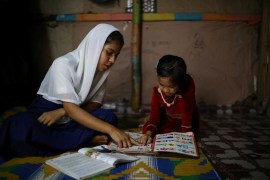
from Brookings Topics – Global Education https://ift.tt/35rWRju
via IFTTT
Every software source code counts – first Software Heritage Acquisition Process launched
Developed by human, software source codes record the human history of the past century through the embedded computational thinking of their …
from Google Alert – “Computational thinking” https://ift.tt/2M8E7ht
via critical thinking
Monthly Archives: October 2019
Artificial intelligence or science of computational thinking in a more human-like manner can truly go a long way to save the day. Currently, AI …
from Google Alert – “Computational thinking” https://ift.tt/2IHHPfK
via critical thinking
 New innovative Approaches