

… approach to learning that encourages curiosity, creativity, artistic expression, collaboration, computational thinking, communication, problem solving, …
from Google Alert – “Computational thinking” https://ift.tt/3cDlu0d
via critical thinking
Tag: IFTTT
Webcast only: How should schools prepare for a coronavirus outbreak?
Webcast only: How should schools prepare for a coronavirus outbreak?
Since the arrival of the COVID-19 virus (also known as coronavirus) in the United States, there are now more than 250 reported cases and 14 deaths across 21 states. As the virus spreads, institutions across the country are taking measures to combat the epidemic. Given how easily illnesses spread in areas with high concentrations of people, schools have become a focal point in preventing the spread of COVID-19. As the virus spreads, some schools in the country have already closed, and many others are contemplating closures or remote learning. But many questions remain about when exactly to close schools, how to continue student learning in the interim, how to minimize disruption to parents, and a host of other considerations.
On March 11, the Brown Center on Education Policy at Brookings will host a webcast only event that will address how schools should prepare for and handle a COVID-19 outbreak. Panelists will discuss possible school closures and the medical, legal, educational, logistical, and equity issues that may arise with such drastic measures.
This event will be a live webcast only discussion. Viewers can submit questions for panelists by emailing events@brookings.edu, or via Twitter at @BrookingsGov or using #COVID19Edu.
from Education Technology https://ift.tt/2PWREtY
via IFTTT
Computational thinking in the STEM disciplines
Computational thinking in the STEM disciplines : foundations and research highlights / Myint Swe Khine, editor. Publication: Cham : Springer, [2018] …
from Google Alert – “Computational thinking” https://ift.tt/2vMcy8b
via critical thinking
Why we need to encourage more young girls to get into STEM
Together, they answer questions ranging from coding to cupcakes, and explore the magic of computational thinking and creativity. ara the star engineer …
from Google Alert – “Computational thinking” https://ift.tt/2TqW6TD
via critical thinking
University of Illinois official named UW president
One way of doing that, he said, is to support expanding education of computer science and computational thinking “across all the domains” of UW …
from Google Alert – “Computational thinking” https://ift.tt/32T4eQ4
via critical thinking
HMS Jr. Beta to compete at nationals
… collaboration, analytical skills, computational thinking, problem solving, effective communication and presentation skills, and Science, Technology, …
from Google Alert – “Computational thinking” https://ift.tt/38qKVim
via critical thinking
6.0001/2, 6.009, and 8.02 switch away from Piazza
This semester, 6.0001/2 (Introduction to Computer Science Programming in Python and Introduction to Computational Thinking and Data Science), …
from Google Alert – “Computational thinking” https://ift.tt/3cAP3zu
via critical thinking
All sec school students to have personal learning devices by 2028
MOE will also expose more children to computational thinking. Starting this year, all primary schools will offer a 10-hour Code for Fun enrichment …
from Google Alert – “Computational thinking” https://ift.tt/3aAJijh
via critical thinking
Optimizing Assessment for All: Focus on Asia
By Esther Care, Alvin Vista, Helyn Kim
Twenty-first century skills (21CS) are now firmly entrenched as learning goals in education systems worldwide, but their actual implementation in teaching and assessment practices is lagging behind. With these learning goals—which prioritize how to get answers rather than just providing a correct response—we are facing new challenges and exploring new solutions.
The report
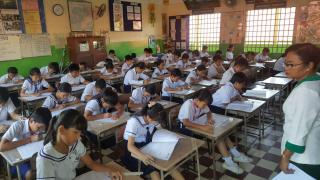
This report describes the collaborative activities undertaken by the Optimizing Assessment for All (OAA) project at Brookings with three countries in Asia—Cambodia, Mongolia, and Nepal—to create 21CS assessment tasks. OAA and partners worked with the countries to identify the 21CS skills that countries value, hypothesized what these skills might look like in classroom assessment tasks, and developed and piloted these tasks to ensure that teachers can use them in classrooms.
The mechanics of the activities are described in detail to illustrate the methods used in the OAA project and by the countries. Comprehensive descriptions of work over a 20-month period from 2018 to 2019 include multicountry workshops, individual in-country workshops and convenings, regional meetings hosted by the Network on Education Quality Monitoring in the Asia-Pacific, virtual communications, and maintenance of an online platform for document sharing and management.
Frequently, assessment studies focus primarily on the tools or tests. For the OAA project, the primary focus was on the process: How do you develop tasks that reflect current curricula and that integrate 21CS into teaching and learning practices?
From this process, it became clear that rethinking the classroom culture is necessary. Concerns expressed during pilot task implementation highlight some of the complexities associated with collaborative work, about not always prioritizing correct answers, and about building knowledge together.
The OAA initiative took just one step in the process of integrating 21CS into the curriculum. The development and introduction of assessment tasks in the classroom is a disruptive force acting as a lever for change. The challenge will be how to deal with that force adaptively.
Photo credit: Preah Norodom Primary School, Cambodia


from Brookings Topics – Global Education https://ift.tt/2VMc38E
via IFTTT
Connecting STEM and ethics
Both introduce computational thinking skills and coding concepts by engaging children in recreating a popular song by programming their robot.
from Google Alert – “Computational thinking” https://ift.tt/2wqkBaP
via critical thinking
 New innovative Approaches