

Purple Mash – the award winning educational resource from …
How to use this Virtual Trainer. This training resource is designed to be used in a staff meeting to introduce teaching staff to Purple Mash. However it can also be used with individual staff members.
find this article at:https://ift.tt/35rPhFv October 09, 2019 at 08:33PM
2 Simple and Purple Mash Help
2 Simple and Purple Mash Help
Purple Mash. Help for our award-winning educational software for primary years that runs on tablets, laptops, and desktop computers in schools. 66 articles by 3 authors
find this article at:https://ift.tt/33qxWeo October 10, 2019 at 03:52PM
Evidence Me – 2 Simple and Purple Mash Help
Evidence Me – 2 Simple and Purple Mash Help
Resources and help about the app for busy practitioners that logs children’s achievements against the Early Years and Primary curriculum. (Formerly known as 2Build-a-Profile).
find this article at:https://ift.tt/2ph02d0 October 11, 2019 at 08:56AM
Login to 2BAP – 2Build a Profile
Login to 2BAP – 2Build a Profile
In-app video is coming! We are inviting users to try our new app with video built in! If you would like to try the great new look video update before anyone else please contact Chris@2eskimos.com
find this article at:https://ift.tt/319uwLl October 11, 2019 at 02:08AM
KS1 & KS2 Spelling Schemes of Work | Scheme Support
KS1 & KS2 Spelling Schemes of Work | Scheme Support
GET IN TOUCH Scheme Support’s aim is to make choosing the right scheme of work as easy as possible. Use the form below or email robert@schemesupport.co.uk
find this article at:https://ift.tt/315XFqZ October 06, 2019 at 02:21AM
SOU professor helps women in STEM fields advance
The first was a two-year $299,000 grant to develop the computational thinking skills of kindergarten through fifth-grade students, led by Eva …
from Google Alert – “Computational thinking” https://ift.tt/2MxK1rk
via critical thinking
How Kids in Tech Teaches Lowell-Area Children About Computer Engineering
“The goal is to ensure the kids have a strong background in computer science, computer literacy and computational thinking skills for kids ages 8 to 14 …
from Google Alert – “Computational thinking” https://ift.tt/2B1ji13
via critical thinking
Beyond labs and numbers: STEM’s role in girls’ skills development in Bangladesh
By Nasrin Siddiqa
Over the last decades, Bangladesh has seen annual GDP growth rates rise due to the arrival of the garment industry. Girls and women from all over the country flooded Dhaka in search of work, and in turn, revolutionized women’s roles as economic players. Years later, the industry is threatened by automation and globalization. While around 80-85 percent of the garment industry is comprised of women, it is the men who have leadership role in factories across the country. The girls and women of Bangladesh can offer much more, and STEM education can help lead the way.
Bangladesh has committed to reaching middle-income country status by 2021 and high-income country status by 2041, but the pathways to achieving this are unclear. Cities have a mass of educated job seekers, but it’s very difficult for rural, underprivileged girls to compete in the labor market. These girls lack basic digital skills and—perhaps more importantly—transferable skills that would equip them to thrive in a changing age of work.
As an NGO leader, science teacher, and school administrator in the last 20 years of my career, I have seen firsthand the talent of adolescent rural girls in communities across the country. The science, technology, engineering, and mathematics fields will be key if girls are to learn important skills like collaboration, problem solving, and critical thinking. Girls have both the talent and ambition to lead in STEM fields, yet they lag behind. I wanted to find out why.
My research
In my research, I interviewed and surveyed over 700 stakeholders—500 girls, 30 administrators, 75 teachers, and 100 parents. I sought to understand why STEM is dominated by men and how that starts in communities and classrooms. A common social belief is that girls are not interested in STEM or that boys are inherently capable of critical problem solving and math. Through my soon to be published research as an Echidna Global Scholar, I have disproved these harmful assumptions.
My research found that the problem lies with our infrastructural, institutional, societal barriers—some of which are visible, others which remain hard to detect. Norms, systems, and attitudes reflect a deeply patriarchal society that not only keeps girls from participating in the subject matter but limits their access to key learning opportunities. My research confirmed what I saw from many years of experience working toward girls’ quality education: Girls showed keen interest and enthusiasm to participate in Bangladesh’s economic development through careers in STEM.
Developing every day, transferrable skills
Broadening thinking around STEM is crucial. As a field, we must consider STEM as a vast category, not limited to scientific equipment and subjects, but something required for everyday life. Unlike in many language and humanities subjects, teachers use project-based learning techniques and group work to encourage innovative thinking in STEM subjects. For instance, through the physical sciences there are clear pedagogical pathways to foster collaborative team work, or through mathematical word problems to foster critical thinking, problem solving, and creativity. These are in fact the skills necessary for future success, regardless of the field of work. To ensure that girls participate fully in a 21st century economy, STEM activities must be leveraged to develop transferable skills.
Bangladesh must work to make our future generation skilled to keep up in a changing, competitive world. If stakeholders work across sectors at macro, middle, and micro levels in government, NGOs, civil society, teacher organizations, and other national and international networks, then we can make a difference. If all youth, particularly rural girls, are not prepared to rise to the challenge, Bangladesh will lose a key opportunity to accelerate its economic development. To transition into a high-income country by 2041, Bangladesh must invest in STEM education now.
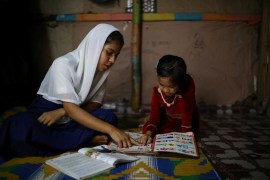


from Brookings Topics – Global Education https://ift.tt/35rWRju
via IFTTT
Every software source code counts – first Software Heritage Acquisition Process launched
Developed by human, software source codes record the human history of the past century through the embedded computational thinking of their …
from Google Alert – “Computational thinking” https://ift.tt/2M8E7ht
via critical thinking
Monthly Archives: October 2019
Artificial intelligence or science of computational thinking in a more human-like manner can truly go a long way to save the day. Currently, AI …
from Google Alert – “Computational thinking” https://ift.tt/2IHHPfK
via critical thinking
 New innovative Approaches