Story, a super powerful learning tool

Story, a super powerful learning tool
Schools UK wide are struggling with the same issues -children entering school with low levels of language and lacking social…

The power of story has been long recognised and researched – and Goldsmiths University of London have found one particular storytelling resource to be making a big difference to schools.

Tales Toolkit puts quality interactions at the heart of everything they do. Created by an ex deputy head teacher while working in some of the most deprived areas of London, Tales Toolkit uses story, a powerful learning gizmo, to engage children. All resources are labelled with easily recognised symbols for Character, setting, problem and solution giving the children skills to independently weave magical tales. Stories are created using anything to hand from a picture of Mum or favourite toy to a conker. Once children are confident storytellers there are lots of resources to get them writing their tales.

Being symbol based all children can easily understand and remember the story structure, even those not yet reading or speaking English. And – you’re going to like this bit – because Tales Toolkit is led by the children there’s little or no planning involved.

Schools that sign up are provided with a package of physical resources along with a year’s subscription to online training for all staff. With the budget crisis, schools are commenting that training provided in this way, where all staff are trained with no need for supply costs, helps them provide the CPD that’s much needed.

{youtube}0aMF9rLyhRU{/youtube}

One headteacher commented ‘All staff, new and experienced, have embraced Tales Toolkit with real enthusiasm and we are reaping the benefits from our equally enthusiastic children. Our children are talking more, confidently telling creative stories as well as engaging in mark making earlier than we usually see it. A real strength is the quality of the training materials which bring together a wealth of sound practice in an accessible and supportive format which you can watch again and again, and we have!’

Stockport, Rochdale and Oxfordshire boroughs have invested local authority money to provide Tales Toolkit for schools in their area. Some of their schools were involved in the research from Goldsmiths which found Tales Toolkit made a significant impact made to children’s language and communication, social skills, literacy and creativity. Schools using Tales Toolkit closed the gender gap in literacy by 62% while control schools saw the gap widen by 22%.

Tales Toolkit while mainly UK based, is now being used in over 200 schools in 12 countries. Winning a number of awards from Teach First, UnLtd, Teach Early Years and Nursery World.

To find out more, read case studies from schools and join their free to attend webinars with top education experts visit their website www.talestoolkit.com or drop an email to info@talestoolkit.com

http://www.innovatemyschool.com/ideas/story-a-super-powerful-learning-tool http://www.innovatemyschool.com/ideas/story-a-super-powerful-learning-tool

The 4Cs of Lifelong Technology

The 4Cs of Lifelong Technology
The 4 Cs of Education – Collaboration, Communication, Creativity, and Critical Thinking – are well embedded in lots of schools.…

Firstly we will consider Collaboration. Although there are lots of opportunities given in school for collaboration in groups and teams, from quick conversations through to group projects, it’s online where collaboration can mimic, and therefore prepare students for, the world of work. There are an increasing number of jobs where remote working and flexible working is in option. Collaboration via technology, and cloud-based systems, is key to ensuring teams can work together, whether they are all working on one document or collating documents and work together in one online folder for dissemination across the company. There are plenty of tools which schools are using for this already in an educational setting – Google Drive and Microsoft O365 are examples of this. The Google Classroom and Microsoft Teams tools have been developed following feedback from schools who wanted to take online working further for their students.

This also leads nicely into the second C – Communication. Again there are options in Microsoft and Google suites which encourage communication. Many other more educational technology products also facilitate this. Learning Platforms in many forms, including home-school communications and homework tools, all form part of a wider communication structure in any organisation. In business a popular tool is Slack, which many schools also use for staff communications even if not for students. Whatsapp is also increasingly common as a communication tool for education and work, not just for social chats and organising nights out!

C 4

Creativity is the third C and probably the trickiest to pin down. Is using a “creative” tool such as iPad drawing apps or online movie making tools classed as genuine creativity? Maybe so. But also creativity can be defined as simply finding new, better or more efficient, ways of doing things we have always done. In schools this may manifest as using video tools such as Flip Grid for Pupil Voice, or using VR to teach someone about a situation they have not experienced before. In work places technology may allow for more creative ways of running a team across multiple continents, or finding a way to cut costs by using new technology to calculate packaging needs.

Finally we come to the 4th C – Critical Thinking. Here things get really exciting in education and in the workplace. Critical Thinking has the capacity to change the world, even if often only for a specific need. The ability to evaluate what we do, think of entirely new inventions, and the capacity to see that through to fruition, are very tricky skills to build authentically into the curriculum. Yet programmes such as Apps for Good, who got to schools and also run national competitions, have resulted in students creating amazing new apps with a view to making genuine change in the world.

C 6

More generally, anything we do to use technology in a positive way, being the role models in front of students and giving them opportunities to try multiple ways of working and applying their skills across the curriculum, the more likely it is that we give them the skills that will follow them through life – making them more likely to go past what can be a very superficial application of technology and social media.

http://www.innovatemyschool.com/ideas/the-4cs-of-lifelong-technology http://www.innovatemyschool.com/ideas/the-4cs-of-lifelong-technology

Divination, or preparing our students for… who knows?

Divination, or preparing our students for… who knows?
When I ask my Sixth Form students what they want to study at university or what they want to be…

This is why, now more than ever before, it is essential to look ahead and to teach and train young people to be independent, to learn how to learn, and to love this process and this journey because this is what will enable and empower them to face whatever life throws at them in the future. Educating the youth of today requires placing emphasis not only on learning and acquiring a solid core of knowledge, but also, and possibly more importantly, on developing skills that will allow them to thrive in the world. These so-called 21st century skills are Collaboration, Communication, Creativity, and Critical thinking: the Four Cs.
But how do we take these concepts and bring them to life in the classroom? There is no secret recipe, but using tech certainly facilitates our efforts. Here are some strategies and activities I have used and have been successful. Feel free to adopt, adapt, and add to them.

Collaboration
In my school, we have started using Microsoft Teams. This has enabled us to maintain a constant and open dialogue amongst staff, but also between teachers and students, and amongst students themselves. I encourage my classes to ask questions in the team space and to attempt to answer them. Often a single student cannot answer the question raised, but by putting in his or her two cents, this triggers someone else to add to the discussion, and very soon, everyone has benefited from everyone else’s input. This yields a far richer experience than if the first student had simply emailed me a question and I had provided guidance or an answer. Teams is not the only software out there that allows these types of group discussion. Showbie, Socrative, Class Dojo or Canvas all offer similar capabilities for collaboration.

C 1

Communication
In addition to the collaborative benefits of some of the software options mentioned above, there are clear communication benefits, in the ease with which messages can be passed on and shared in real time. But I want to talk about a different aspect of communication.

I am a teacher of languages (mostly), so you can imagine how important communication has always been to me. I believe language learners should take risks and attempt to use the language they are learning, even if they make mistakes. But I don’t need to tell you how daunting that prospect can be, especially for a teenager in front of a whole class of teenagers. So here is where tech comes in. I have used voice recognition software to help students practise their pronunciation. They need to read out a short extract, focusing on pronouncing all words correctly in Spanish. If their pronunciation is clear, Siri, Cortana, or Google Assistant will transcribe accurately. But if they muddle the sounds, the output will be wrong. And I don’t need to tell them. They realize it themselves and work independently on improving their productions. So when they do speak out in class and try to communicate with me, other students, or even Spanish people, they are much more effective and feel more secure.

Creativity
We all have our strengths, but creativity is not one of mine. Fortunately for my students, my limitations in this area do not need to be their limitations too. Using the students’ devices has allowed me to let my students unleash their creativity. I will often set up a task that has two possible formats: one, a given task that enables my students to use the language we have been studying (for example); and another in which the use of the language is necessary, but the actual outcome is completely up to the individuals or groups undertaking the task. For instance, with my Year 7 Spanish class we were studying physical descriptions. I asked them to find a photograph online of someone they admired and gave them a choice between writing a description of the person in the photograph or creating a “Wanted” poster. Those who chose the second option produced brilliant posters and really went to town on the descriptions, taking risks they may not have done if they had simply written a description. We voted on the best posters and put them on display in the classroom. So in addition to meeting our academic aims, I was able to update my display boards with little effort from myself. And the kids were very proud of their work. The next time I gave them a choice, even more students chose the creative task. Win-win!

C 3

Critical thinking
In my classroom I have a big sign showing the five Bs: Brain, Board, Book, Buddy, Boss. The use of technology in the classroom has expanded the meaning of Board and Book, and therefore allowed me to push my students to higher order thinking from the very first lesson. I aim to give them the tools so that they can make their own connections and tackle increasingly challenging tasks. And if they ask or say that they don’t know how to do the task set, I always guide them back to the resources I have made available to them that provide enough scaffolding for them to stretch themselves and learn new concepts. For example, I will give my GCSE Spanish students an “open book” grammar test. “Open book” means that they can use their textbooks (online), plus Quizlet (online vocabulary learning tool), plus grammar reference pages… anything, except for automatic translators. But the tasks in the test are about putting concepts in practice, so even with all those tools, they have to think in order to figure out what rule to apply, how it should be used, and finally provide an answer. The first time we do it, everyone thinks it will be super easy… they soon learn that thinking is much more difficult than memorizing, but the benefits are spectacular. After one of these tests, if I give them an exam-style writing task, they always improve their scores.

Focusing on developing these skills is crucial. We don’t know what the future has in store for our students. But if they know how to think critically, collaborate with each other by using good communication strategies, and have some creativity to draw from, we will have equipped them with strong, useful tools to tackle the challenges they will face, even those we cannot yet foresee.

http://www.innovatemyschool.com/ideas/divination-or-preparing-our-students-for-who-knows http://www.innovatemyschool.com/ideas/divination-or-preparing-our-students-for-who-knows

Closing the opportunity gap in the Sahel

By Hafez Ghanem, Annette Dixon

Inundated by bleak headlines and even bleaker forecasts, it is easy to forget that, in many ways, the world is better than it has ever been. Since 1990, nearly 1.1 billion people have lifted themselves out of extreme poverty. The poverty rate today is below 10 percent – the lowest level in human history. In nearly every country, people are healthier and better educated than ever before. Yet, as a just-released Goalkeepers report underscores, hardship remains the norm for many people worldwide, who continue to face high barriers to building a healthy, productive life.

America’s Democrats have made a serious mistake by launching impeachment proceedings against President Donald Trump. They are replaying the Republican impeachment of Bill Clinton in 1998, a futile exercise that damaged Republicans, enhanced Clinton’s power, and caused institutional damage as well.

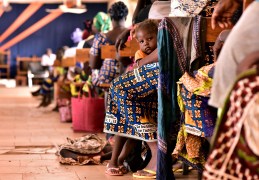
Nowhere is this truer than among the poorest residents of the Sahel region of sub-Saharan Africa. The countries of the Sahel rank among the world’s lowest on the Human Capital Index, which quantifies the contribution of health and education to the productivity of the next generation of workers. According to the Goalkeepers report, a child in Chad is 55 times more likely to die in the first five years of life than a child in Finland. Nearly half the people living in Chad live below the poverty line, only 50 percent of children attend school, and just 15 percent of sixth-graders are able to read a simple story. Poverty is exacerbated by climate change, conflict, and displacement, making it even more difficult for families to invest in their human capital.

To ensure that all people—not just those lucky enough to be born into relative geographic, gender, or socioeconomic privilege—can fulfill their potential, governments must invest more in human-capital formation. This means strengthening education systems, so that residents can acquire the skills they need to thrive economically. And it means ensuring access to quality health and nutrition services.

Just as malnourished or otherwise unhealthy adults are less productive, malnourished or otherwise unhealthy children cannot learn as effectively, let alone grow into healthy, productive adults. But making the most of such investments demands not only generalized efforts, but also delivery of services tailored for girls and women, from family planning through childhood and adulthood.

Such services can enable girls to stay in school longer, gaining the knowledge and skills they need to participate effectively in the labor force. By allowing girls and women to choose to delay pregnancy and child-rearing until they are ready, such services not only support women’s empowerment; they also advance economic progress.

Healthier, better-educated mothers have healthier, better-educated families, not least because women tend to invest more of their incomes in their children. Through this channel, woman-focused health services ultimately help to raise living standards and break the cycle of poverty, while spurring broader economic development.

To help countries to reap these benefits, in 2017 the World Bank created the Human Capital Project, which works to catalyze investments in health and education, and to guide them in ways that provide all people with equal opportunities to thrive. The Bank is also cooperating with partners to achieve a 50 percent increase in overall resources for human capital in Africa by 2023, with a focus on fragile and conflict affected countries.

Our experience working in challenging contexts has shown that, to make the most of these investments, countries must pursue an integrated multisector approach, tailor interventions to each community’s needs, and engage all stakeholders, from religious leaders and health workers to mothers and husbands. The Sahel Women’s Empowerment and Demographic Dividend Project (SWEDD)—supported by the United Nations Population Fund, the Bill & Melinda Gates Foundation, and other development partners—is a case in point.

SWEDD is working closely with governments in the Sahel to equip them to provide health and nutrition support, advance gender equality, improve school quality, and introduce social safety nets. To support this process, SWEDD is pursuing innovative initiatives in a broad range of countries, from Benin to Côte d’Ivoire.

In Burkina Faso, current and future husbands are learning about the importance of family planning and of distributing household chores more equally at one of more than 1,600 “husband clubs.” In Mauritania, SWEDD is working with community and religious leaders to help reduce gender discrimination, violence against women, and child marriages.

In Chad, SWEDD-backed vocational training programs are equipping women with marketable skills, such as driving tractors and installing solar electrical systems. And in Mali, SWEDD is distributing bicycles to help girls get to school and providing support to midwives, so that they can provide critical prenatal, delivery, and postnatal health services in poor areas, thereby reducing maternal and infant mortality.

If the world is to continue to improve, let alone achieve the U.N. Sustainable Development Goals, poor countries like those in the Sahel must strengthen their human-capital foundation. It will not be easy, but experience shows that with sustained investment, close coordination, and an inclusive approach, it is possible.


from Brookings Topics – Global Education https://ift.tt/2oW6oOT
via IFTTT

Closing the opportunity gap in the Sahel

By Hafez Ghanem, Annette Dixon

Inundated by bleak headlines and even bleaker forecasts, it is easy to forget that, in many ways, the world is better than it has ever been. Since 1990, nearly 1.1 billion people have lifted themselves out of extreme poverty. The poverty rate today is below 10 percent – the lowest level in human history. In nearly every country, people are healthier and better educated than ever before. Yet, as a just-released Goalkeepers report underscores, hardship remains the norm for many people worldwide, who continue to face high barriers to building a healthy, productive life.

America’s Democrats have made a serious mistake by launching impeachment proceedings against President Donald Trump. They are replaying the Republican impeachment of Bill Clinton in 1998, a futile exercise that damaged Republicans, enhanced Clinton’s power, and caused institutional damage as well.

Nowhere is this truer than among the poorest residents of the Sahel region of sub-Saharan Africa. The countries of the Sahel rank among the world’s lowest on the Human Capital Index, which quantifies the contribution of health and education to the productivity of the next generation of workers. According to the Goalkeepers report, a child in Chad is 55 times more likely to die in the first five years of life than a child in Finland. Nearly half the people living in Chad live below the poverty line, only 50 percent of children attend school, and just 15 percent of sixth-graders are able to read a simple story. Poverty is exacerbated by climate change, conflict, and displacement, making it even more difficult for families to invest in their human capital.

To ensure that all people—not just those lucky enough to be born into relative geographic, gender, or socioeconomic privilege—can fulfill their potential, governments must invest more in human-capital formation. This means strengthening education systems, so that residents can acquire the skills they need to thrive economically. And it means ensuring access to quality health and nutrition services.

Just as malnourished or otherwise unhealthy adults are less productive, malnourished or otherwise unhealthy children cannot learn as effectively, let alone grow into healthy, productive adults. But making the most of such investments demands not only generalized efforts, but also delivery of services tailored for girls and women, from family planning through childhood and adulthood.

Such services can enable girls to stay in school longer, gaining the knowledge and skills they need to participate effectively in the labor force. By allowing girls and women to choose to delay pregnancy and child-rearing until they are ready, such services not only support women’s empowerment; they also advance economic progress.

Healthier, better-educated mothers have healthier, better-educated families, not least because women tend to invest more of their incomes in their children. Through this channel, woman-focused health services ultimately help to raise living standards and break the cycle of poverty, while spurring broader economic development.

To help countries to reap these benefits, in 2017 the World Bank created the Human Capital Project, which works to catalyze investments in health and education, and to guide them in ways that provide all people with equal opportunities to thrive. The Bank is also cooperating with partners to achieve a 50 percent increase in overall resources for human capital in Africa by 2023, with a focus on fragile and conflict affected countries.

Our experience working in challenging contexts has shown that, to make the most of these investments, countries must pursue an integrated multisector approach, tailor interventions to each community’s needs, and engage all stakeholders, from religious leaders and health workers to mothers and husbands. The Sahel Women’s Empowerment and Demographic Dividend Project (SWEDD)—supported by the United Nations Population Fund, the Bill & Melinda Gates Foundation, and other development partners—is a case in point.

SWEDD is working closely with governments in the Sahel to equip them to provide health and nutrition support, advance gender equality, improve school quality, and introduce social safety nets. To support this process, SWEDD is pursuing innovative initiatives in a broad range of countries, from Benin to Côte d’Ivoire.

In Burkina Faso, current and future husbands are learning about the importance of family planning and of distributing household chores more equally at one of more than 1,600 “husband clubs.” In Mauritania, SWEDD is working with community and religious leaders to help reduce gender discrimination, violence against women, and child marriages.

In Chad, SWEDD-backed vocational training programs are equipping women with marketable skills, such as driving tractors and installing solar electrical systems. And in Mali, SWEDD is distributing bicycles to help girls get to school and providing support to midwives, so that they can provide critical prenatal, delivery, and postnatal health services in poor areas, thereby reducing maternal and infant mortality.

If the world is to continue to improve, let alone achieve the U.N. Sustainable Development Goals, poor countries like those in the Sahel must strengthen their human-capital foundation. It will not be easy, but experience shows that with sustained investment, close coordination, and an inclusive approach, it is possible.


from Brookings Topics – Global Education https://ift.tt/2nvLZ2L
via IFTTT

Hertfordshire Grid for Learning

Hertfordshire Grid for Learning
Securing age-related expectations in English – Year 3 and 4 Monday 30th September 2019 Book now New to the role of teaching assistant Thursday 3rd October 2019 Book now Dust off the iPads – great apps and better practice for primary schools Thursday 3rd October 2019 Book now New to Year 6 assessment Tuesday 8th October 2019 Book now Essential introduction to HR for school leaders Tuesday 8th …
find this article at:https://ift.tt/2oyaNrg September 27, 2019 at 08:25PM